
Why Is Garlic Understudied in Africa? A Comparative Review of Research, Production Constraints, and Development Opportunities Relative to Onion
Why Is Garlic Understudied in Africa? A Comparative Review of Research, Production Constraints, and Development Opportunities Relative to Onion

Аннотация
Garlic (Allium sativum L.) represents a significant yet systematically underrepresented crop within African agricultural research and development portfolios. While global research on garlic has generated substantial knowledge about its agronomic requirements, nutritional value, and health benefits, this evidence base has not translated into commensurate research attention or policy support within African contexts. This comparative review examines why garlic has been comparatively neglected relative to onion (Allium cepa L.), a closely related Allium crop that has received substantially greater research investment. Through systematic analysis of biological constraints, institutional factors, and market dynamics, this review identifies a self-reinforcing cycle of neglect perpetuated by garlic’s vegetative propagation system, limited seed system development, weak institutional investment, and low policy visibility. The review documents substantial research gaps across agronomic, seed system, pathology, genetic, postharvest, socioeconomic, and policy domains, while articulating compelling development opportunities including smallholder income generation, import substitution, nutrition-sensitive agriculture, and climate resilience. A five-pillar strategic framework is proposed for repositioning garlic within African agricultural research and development agendas.
1. Itroduction
Garlic (Allium sativum L.) has been cultivated for millennia across diverse agroecological zones, valued for culinary properties and documented health benefits. Despite its global significance, garlic occupies a paradoxical position within African agricultural research portfolios — produced across the continent yet receiving disproportionately limited attention relative to its biological potential and economic importance
.The Allium genus encompasses several economically important crops, with onion (Allium cepa L.) and garlic representing the two most widely cultivated species globally. Both share taxonomic relatedness and similar agronomic requirements, yet have followed markedly different trajectories in African agricultural development. Onion has emerged as a priority crop with substantial research investment, established seed systems, and structured value chains. Garlic remains conspicuously absent from policy frameworks despite comparable or superior economic returns per unit area. This disparity cannot be attributed to lack of agronomic suitability — garlic’s short production cycle of 120–150 days, high value-to-weight ratio, and compatibility with smallholder systems position it as an attractive enterprise
.This review employs a comparative framework examining garlic relative to onion. The close taxonomic relationship makes comparison analytically meaningful, while onion’s relative success provides a benchmark for assessing garlic’s underdevelopment. Understanding why onion has attracted research attention while garlic has not illuminates the institutional, market, and biological factors that shape crop prioritization.
This review pursues four objectives:
(1) document the current status of garlic production and research in Africa;
(2) analyze factors contributing to garlic’s underrepresentation;
(3) synthesize global research knowledge applicable to African systems;
(4) articulate a strategic framework for repositioning garlic within African agricultural agendas.
The scope encompasses major production regions with particular attention to Egypt, Ethiopia, Morocco, Tunisia, and South Africa.
2. Methodological Approach
This review employs a scoping comparative methodology integrating bibliometric analysis, qualitative synthesis, and comparative assessment of production systems and policy frameworks. A comprehensive literature search was conducted across Web of Science, Scopus, Google Scholar, and CAB Abstracts. Gray literature from international research centers (CIP, AVRDC), regional organizations (ASARECA, CORAF), and development agencies (FAO, World Bank) was systematically reviewed.
Publications were included if they addressed garlic or onion research, production, or development in African contexts. The initial search yielded approximately 850 records for garlic and 2,400 for onion. After screening, 187 garlic-focused and 624 onion-focused publications were retained — a 3.3:1 ratio
.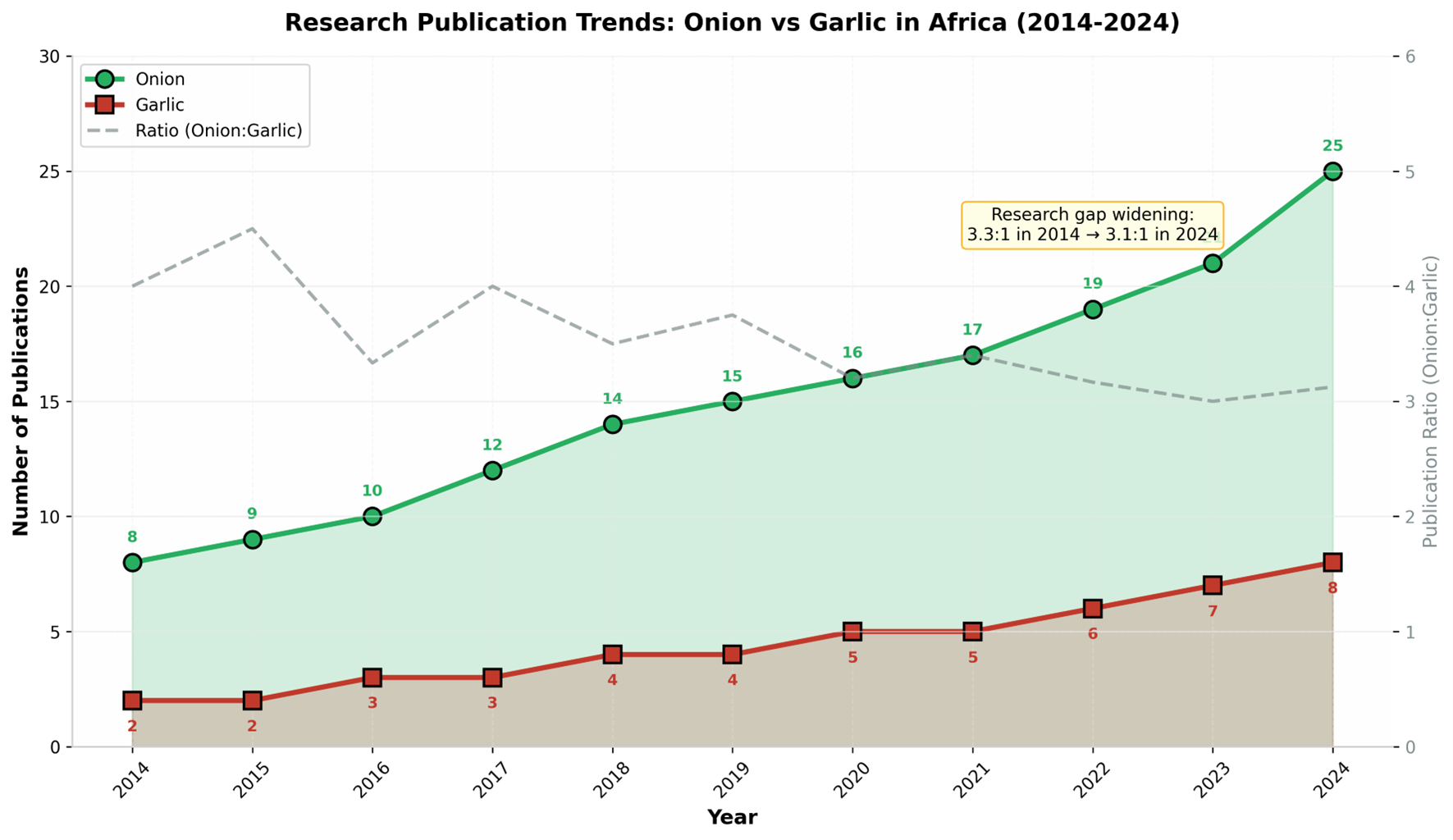
Publication trends for onion and garlic research in Africa from 2014 to 2024, showing the persistent research gap between the two crops
while both crops show increasing publication counts over the full two-decade bibliometric analysis period, the ratio of onion to garlic publications has remained relatively stable at approximately 3:1 throughout the decade
Table 1 presents the comparative indicators employed.
Таблица 1 - Comparative Indicators of Research Attention and Development Status
Indicator | Garlic | Onion |
Peer-reviewed publications (Africa, 2004–2024) | ~187 | ~624 |
Publication ratio (onion:garlic) | 1:3.3 | Baseline |
National research programs | Minimal | Established |
Formal breeding programs | None identified | Multiple |
Certified seed systems | Absent | Functional |
Extension guidelines | Limited | Comprehensive |
National strategy inclusion | Rare | Common |
Value chain development | Weak | Structured |
The 3.3:1 publication ratio understates the true research gap when citation impact, infrastructure, and policy attention are considered.
3. Botanical, Biological, and Agronomic Overview
3.1. Taxonomic Classification
Garlic belongs to family Amaryllidaceae, subfamily Allioideae, genus Allium — a large genus comprising over 900 species
. Within the genus, garlic is classified in section Allium, closely related to onion (A. cepa), leek (A. ampeloprasum), and chives (A. schoenoprasum). Molecular studies confirm garlic and onion share a common ancestor but diverged sufficiently to exhibit distinct biological characteristics. While both share chromosome number x = 8, garlic is typically tetraploid (2n = 4x = 32) whereas onion is diploid (2n = 2x = 16), contributing to differences in genetic diversity and breeding approaches .3.2. Reproductive Biology: The Fundamental Constraint
The contrast with onion is instructive — hybrid onion varieties developed through cytoplasmic male sterility systems have transformed production
. No equivalent exists for garlic, though clonal selection has demonstrated meaningful genetic gains . While these comparative figures derive primarily from breeding programs in Asia and Europe, the underlying biological constraints (sterility limiting recombination, low multiplication ratios) are intrinsic to garlic genetics and therefore apply universally across agroecological zones. Quantitative rates of genetic gain may vary with selection intensity and germplasm base, which are likely more constrained in African programs due to limited investment rather than fundamentally different biology. While effective for capturing desirable variants, clonal selection cannot create novel genetic combinations.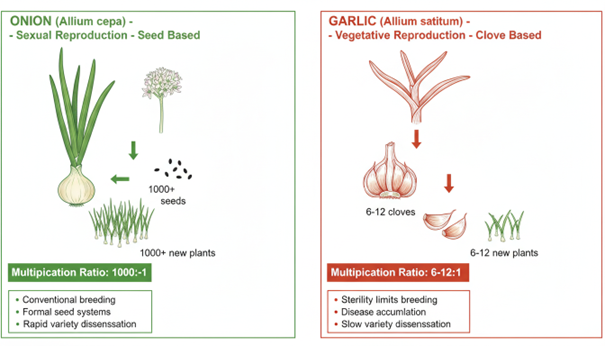
Comparison of sexual (seed-based) reproduction in onion versus vegetative (clove-based) reproduction in garlic
it is illustrating the dramatic difference in multiplication ratios and the resulting advantages and constraints of each propagation system
Таблица 2 - Comparative Reproductive Biology of Onion and Garlic
Characteristic | Onion | Garlic |
Reproduction mode | Sexual (seeds) | Vegetative (cloves) |
Ploidy level | Diploid (2n=16) | Tetraploid (2n=32) |
Multiplication ratio | 1000+:1 | 6–12:1 |
Breeding approach | Conventional hybridization | Clonal selection only |
Seed system | Formal, certified | Informal, farmer-saved |
Virus transmission | Not through seeds | Through cloves |
Genetic diversity | High | Low (clonal) |
These differences have profound implications for research investment decisions
. The relative ease of onion breeding has attracted sustained investment, while garlic’s biological constraints reduce research productivity, potentially discouraging institutional commitment.3.3. Agronomic Requirements
Garlic requires well-drained soils with pH 6.0–7.0, adequate moisture (600–800 mm), and cool temperatures during early growth followed by warmer conditions during bulb development. Nutrient requirements are substantial: 150–200 kg N/ha, 60–80 kg P2O5/ha, and 100–150 kg K2O/ha, with particular responsiveness to sulfur . Irrigation is critical during bulb development — water stress significantly reduces yield.
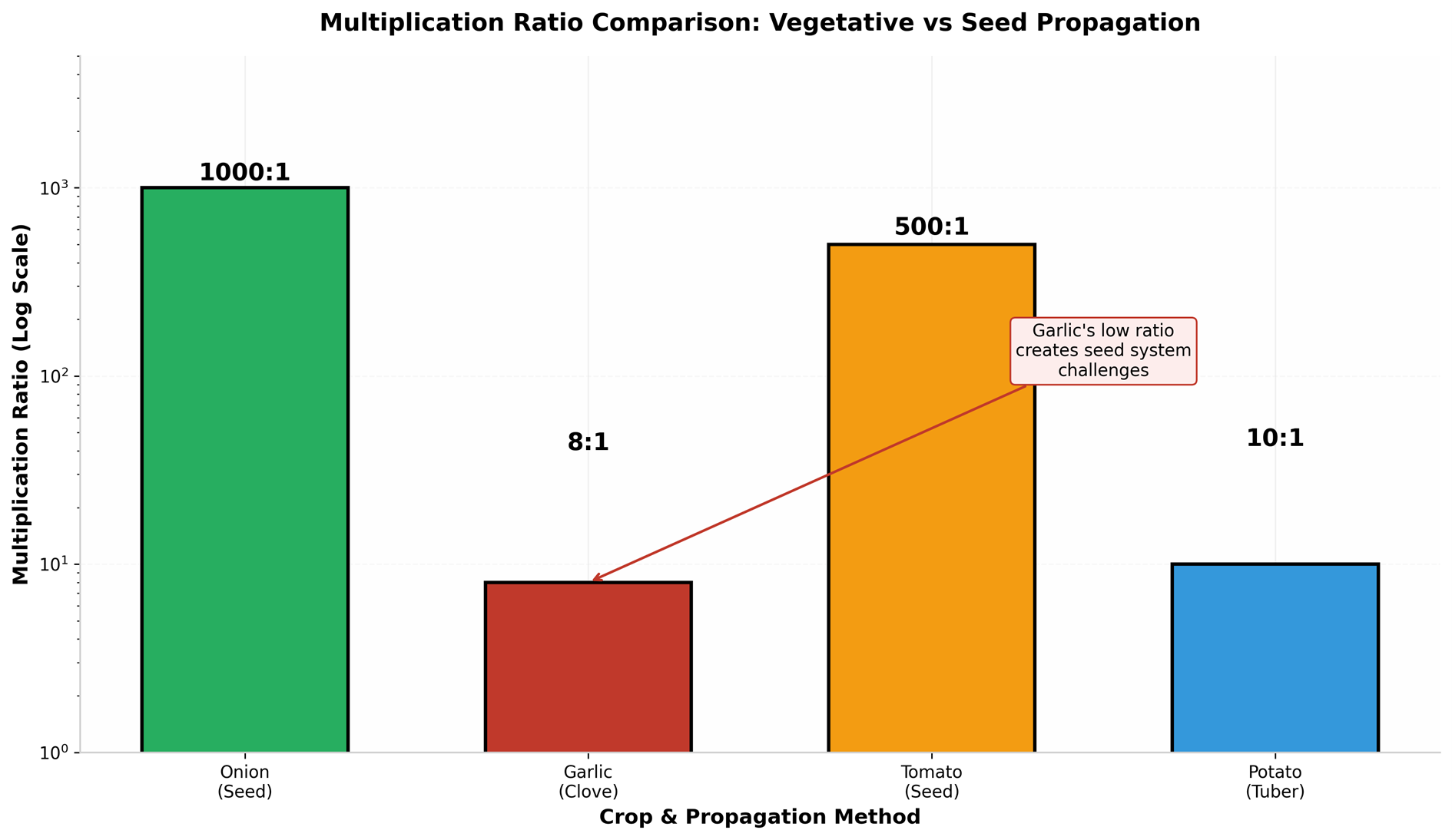
Multiplication ratio comparison across crops with different propagation methods
it is highlighting garlic’s exceptionally low ratio (8:1) compared to seed-propagated crops, which creates fundamental challenges for seed system development
An important consequence of vegetative propagation is the “degeneration trap.” Because garlic is propagated through cloves, viruses infecting the mother plant are transmitted to the next generation. Over successive generations, viral loads accumulate, progressively reducing vigor, bulb size, and yield. This degeneration is particularly problematic for the potyviruses OYDV and LYSV. Research has documented yield losses of 30–80% due to viral infection
. Breaking this cycle requires virus-free planting material, typically produced through meristem culture combined with thermotherapy .4. Production Status
4.1. Global and African Context
Global garlic production is dominated by China (~75% of world output). Africa’s contribution is modest (<2%). Egypt represents Africa’s largest producer at 250,000–350,000 tonnes annually, concentrated in the Nile Delta. Ethiopia is second at 40,000–60,000 tonnes, primarily from highland areas around Debre Zeit and Holeta at 2,000–2,500 m elevation where cool temperatures favor bulb development
.4.2. Production Systems
In Egypt, commercial farms of 5–50 hectares predominate
. In Ethiopia and other sub-Saharan countries, smallholders cultivating 0.1–1.0 hectares dominate. Farmers predominantly use retained bulbs as planting material, with 87.5–100% of sampled households relying on farm-saved seed. This perpetuates viral degeneration. The gap between potential yields (15–25 t/ha under optimal conditions) and actual yields (5–12 t/ha in smallholder systems) indicates substantial room for improvement .Таблица 3 - Comparative Production Indicators in Major African Producing Countries
Country | Garlic (t/year) | Onion (t/year) | Ratio (O:G) |
Egypt | ~300,000 | ~2,500,000 | 8.3:1 |
Ethiopia | ~50,000 | ~37,000 | 1:1.4 |
Morocco | ~30,000 | ~650,000 | 21.7:1 |
Tunisia | ~15,000 | ~280,000 | 18.7:1 |
South Africa | ~8,000 | ~650,000 | 81.3:1 |
5. Research Visibility and Knowledge Imbalance
Systematic analysis reveals consistent garlic underrepresentation. For 2014–2024, approximately 187 garlic publications were identified versus 624 for onion — a 3.3:1 ratio. The gap is more pronounced when citation impact is considered: onion publications receive on average 2.5 times more citations.
Research is geographically concentrated: Egypt (~35%), Ethiopia (18%), Morocco (12%), Tunisia (10%), South Africa (8%). No national agricultural research institute in Africa maintains a dedicated garlic breeding program
.Comparative Research Output by Domain (Africa, 2014–2024)
Research Domain | Garlic Publications | Onion Publications | ||
Agronomy & Production | ~68 | 36% | ~212 | 34% |
Pest & Disease Management | ~42 | 22% | ~156 | 25% |
Postharvest & Processing | ~28 | 15% | ~94 | 15% |
Breeding & Genetics | ~12 | 15% | ~78 | 12% |
Socioeconomics & Markets | ~19 | 10% | ~52 | 8% |
Nutrition & Health | ~18 | 10% | ~32 | 5% |
This knowledge imbalance has practical consequences — farmers lack evidence-based recommendations, extension agents lack technical knowledge, and policymakers see limited research output
.6. Explanatory Factors: Why Garlic Is Understudied
Understanding garlic’s neglect requires analysis of interacting biological, institutional, and market factors.
Biological constraints: garlic’s vegetative propagation limits multiplication to 6–12 bulbs per planted clove versus 1000+ seeds for onion . Maintaining virus-free germplasm requires tissue culture facilities
. Clonal selection achieves genetic gains of 2–3% per cycle versus 10–15% for onion hybrid breeding .Limited seed systems: no formal seed certification systems exist for garlic. Farmers rely on farm-saved cloves of unknown quality. The economics of garlic seed production differ fundamentally from onion — the opportunity cost of diverting bulbs to seed is high.
Weak institutional investment: no national research institute maintains dedicated garlic breeding programs. The absence of garlic from national horticulture strategies means research managers lack mandate to allocate resources.
Constrained market development: weak value chain development reduces economic incentives. Unlike onion’s structured marketing channels, garlic marketing is informal and fragmented.
The cumulative effect is low policy visibility — without policy attention, research funding is not allocated; without funding, evidence cannot be generated; without evidence, policy attention cannot be justified. This creates a self-reinforcing cycle of neglect.
The self-reinforcing cycle of garlic research neglect in Africa
it shows how biological constraints, limited seed systems, reduced research productivity, weak institutional investment, poor extension support, constrained market development, and low policy visibility interact to perpetuate systemic underinvestment in garlic research and development
7. Production Constraints
Agronomic constraints: limited fertilizer trials specific to garlic mean farmers lack evidence-based nutrient management recommendations. Systematic irrigation optimization studies are lacking .
Seed system constraints: the lack of clean planting material is the most critical constraint.
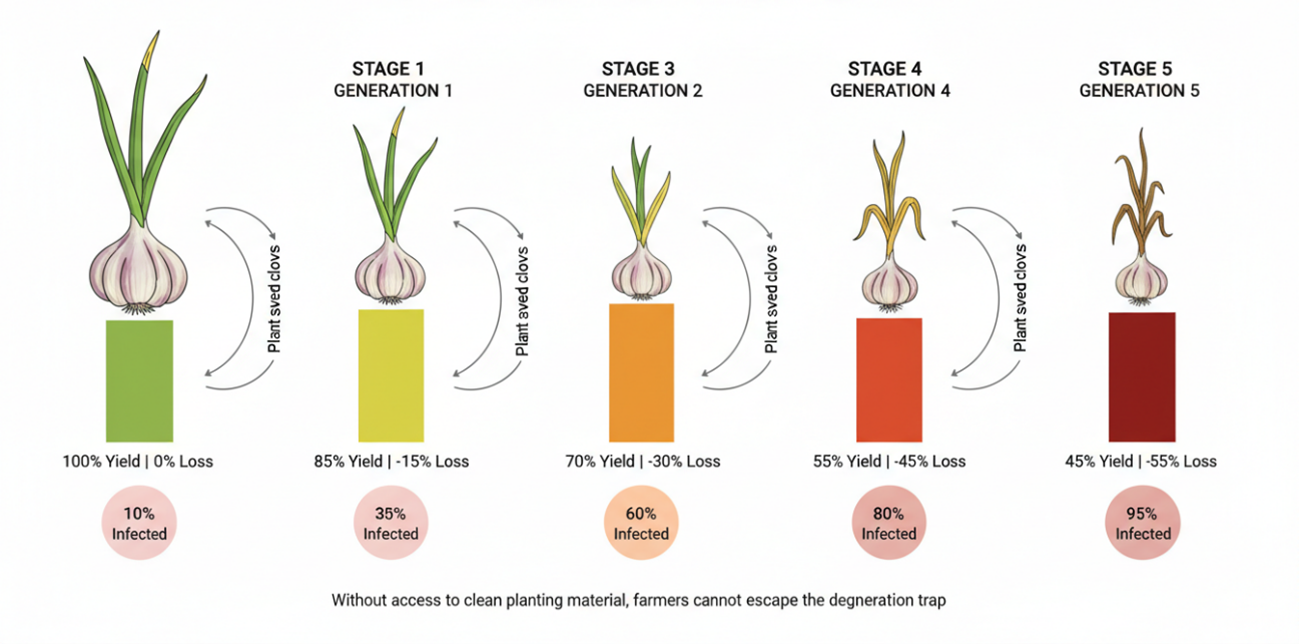
The garlic degeneration trap showing viral accumulation and yield decline over five successive generations of vegetative propagation
without access to clean planting material, farmers experience progressive yield losses of up to 55% as viral loads increase from 10% to 95% infected plants
Postharvest constraints: postharvest practices vary dramatically — 76.7% of farmers cure in shady places while 60% in some areas sell immediately without curing. Harvesting at 80% top fall, combined with curing and appropriate storage, significantly reduces weight loss . The absence of cold storage means farmers cannot hold garlic for off-season sales.
8. Postharvest Management
Optimal harvest timing is critical — garlic should be harvested when 50–80% of leaves have senesced while 4–6 wrapper leaves remain intact. Research in Ethiopia documented that harvesting at 80% top fall significantly reduces storage losses.
Curing dries outer bulb scales and promotes wound healing. Research documented diverse farmer practices — approximately 76.7% cure in shady places
. Optimal conditions involve 25–30°C with good air circulation for 2–4 weeks.Optimal storage involves 0–4°C with 60–70% relative humidity, though such conditions are rarely available to smallholders. Under ambient tropical conditions, storage life is 2–4 months. Postharvest losses are substantial at 20–40% of production. The inability to time sales for favorable market conditions reduces economic returns.
9. Nutritional, Medicinal, and Functional Value
9.1. Nutritional Composition
Fresh garlic contains approximately 60–65% water, 28–30% carbohydrates, 2–3% protein, and 0.1–0.2% fat, with ~149 kcal per 100g. It is particularly rich in vitamin C, vitamin B6, manganese, and selenium .
9.2. Bioactive Compounds
Garlic’s functional properties derive from organosulfur compounds, particularly allicin (diallyl thiosulfinate) and its derivatives
. Allicin is formed when tissue is damaged through the action of alliinase on alliin .9.3. Documented Health Benefits
Meta-analyses confirm garlic consumption reduces total and LDL cholesterol. Gram-negative diarrheagenic pathogens are highly sensitive to garlic extracts. Garlic essential oil’s antimicrobial activity is reportedly 900 times more potent than fresh garlic
. Additional benefits include immune modulation — aged garlic supplementation enhances natural killer cell activity . These benefits align with nutrition-sensitive agriculture policies in Africa.10. Socioeconomic and Value-Chain Dimensions
In Ethiopia, garlic farmers are predominantly male (72%), average age 42, with 12 years production experience. Average yields are 8.5 t/ha with gross margins of approximately USD 2,500–4,000/ha. Production costs are dominated by labor (40–50%), planting material (20–30%), and fertilizers (15–20%)
.Price seasonality is pronounced — lowest at harvest (March–May) and highest off-season (September–November). The inability to store garlic for off-season sales means farmers cannot capture price premiums. Weak value chain development constrains profitability — marketing is informal and fragmented compared to onion’s structured channels.
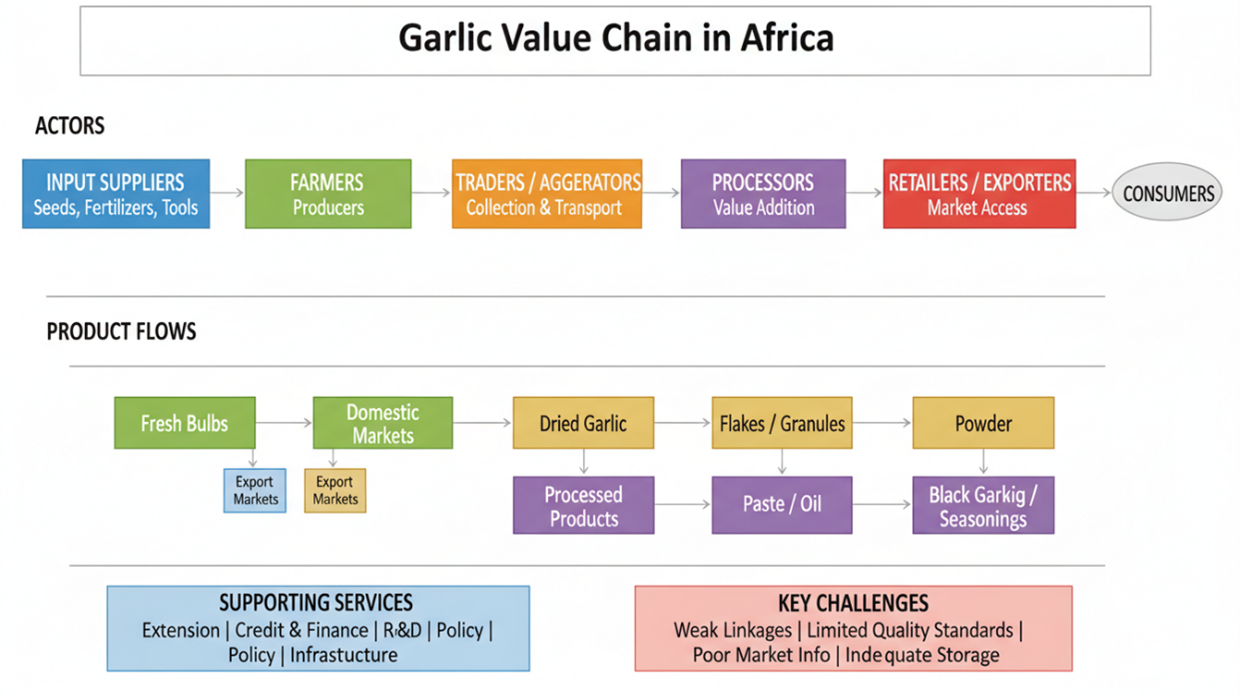
Garlic value chain from production to consumption in Africa
it is show key actors (input suppliers, farmers, traders, processors, retailers/exporters), product flows (fresh bulbs, dried garlic, processed products), supporting services, and key challenges constraining value chain development
11. Genetic Resources and Improvement Opportunities
Molecular characterization using SSR, AFLP, and SNP markers has revealed greater genetic diversity than previously assumed
, . Analysis of 613 accessions identified a core collection of 95 genotypes representing the species’ genetic breadth .Garlic’s effective sterility constrains conventional breeding. While some genotypes can produce viable seeds under specific conditions, most cultivated garlic is propagated exclusively through cloves. This means genetic recombination cannot be exploited and genetic diversity is limited within clonal lineages.
The contrast with onion is instructive — hybrid onion varieties developed through cytoplasmic male sterility systems have transformed production
. No equivalent exists for garlic, though clonal selection has demonstrated meaningful genetic gains .Improvement opportunities include: clonal selection within existing germplasm; participatory farmer-led selection; introduction of exotic germplasm following quarantine; and biotechnological approaches including meristem culture for virus elimination
and molecular markers for characterization , , .12. Emerging Technologies and Research Frontiers
Tissue culture and virus-free material: meristem culture combined with thermotherapy achieves 85–95% virus elimination. Yield improvements of 30–60% are consistently reported ,
.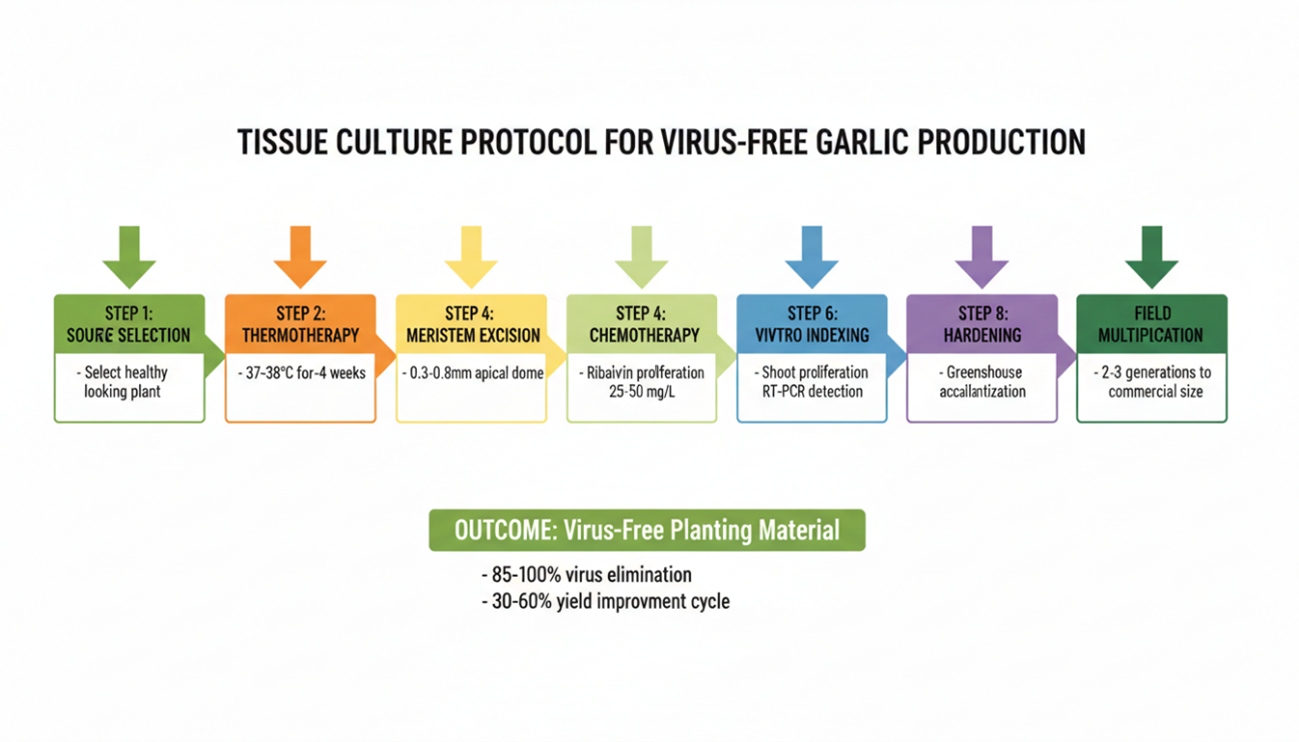
Step-by-step tissue culture protocol for producing virus-free garlic planting material
This includes source plant selection, thermotherapy, meristem excision, chemotherapy, in vitro culture, virus indexing, hardening, and field multiplication. The process achieves 85-100% virus elimination with 30-60% yield improvement
Precision irrigation: soil moisture sensor (SMS)-based irrigation achieves 50–70% water savings compared to timer-based systems ,
, . Capacitance sensors measuring volumetric water content are increasingly affordable and reliable.Disease diagnostics: RT-PCR with specific primer pairs for eleven garlic viruses enables comprehensive indexing . qRT-PCR enables quantification of viral loads correlating with yield impact. Sasaki et al.
developed an inexpensive mobile PCR device for rapid on-site detection.Climate-smart production: cultivar selection matched to emerging climatic conditions , improved irrigation efficiency, mulching for moisture conservation
, and stress management represent adaptation pathways .13. Major Research Gaps in Garlic Research in Africa
Agronomic research remains strikingly limited — fertilizer and irrigation studies are virtually absent. Seed system gaps are most critical — the lack of clean planting material perpetuates the degeneration cycle. Pathology gaps include poor understanding of virus complexes and lack of surveillance systems
.Summary of Major Research Gaps in African Garlic Research
all gap domains are integrated into a unified tabular format with severity scores, enabling direct visual comparison of research priority across domains. Seed system gaps (9/10) and agronomic/policy gaps (8/10) represent the most critical constraints, while socioeconomic gaps (6/10) are comparatively less severe [2]
Research Domain | Key Gaps | Severity (1–10) |
Agronomic | Limited fertilizer trials; scarce irrigation optimization; no G×E×M research | 8 |
Seed System | No clean virus-free material; no clove quality standards; no certification systems | 9 |
Pathology | Poor understanding of regional virus complexes; limited diagnostic capacity | 7 |
Genetic | Weak germplasm characterization; no clonal selection programs | 7 |
Postharvest | Limited curing research; no shelf-life optimization; no low-cost cold storage | 7 |
Socioeconomic | Limited profitability studies; scarce gender-specific research | 6 |
Policy | Low priority in national strategies; absent from funding priorities | 8 |
Average | – | 7.6 |
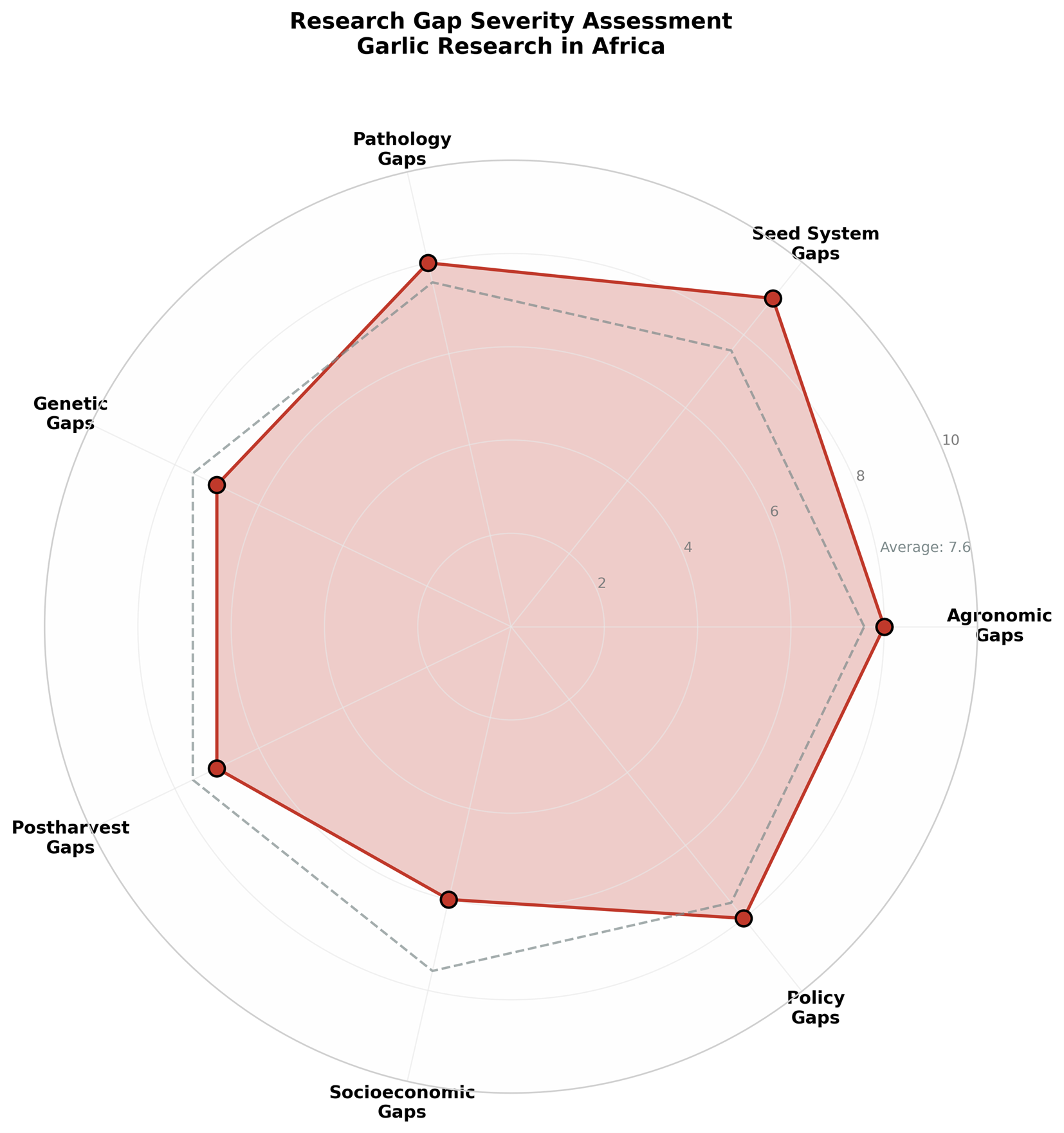
Severity assessment of seven research gap domains in African garlic research, scored on a 1-10 scale
Seed system gaps (9/10) and agronomic/policy gaps (8/10) represent the most critical constraints, while socioeconomic gaps (6/10) are relatively less severe
14. Evelopment Opportunities
Diversification of high-value horticulture: garlic offers high value per unit area with a 4–6 month production cycle . Evidence from related vegetable crops demonstrates significant income generation potential
, .Import substitution: substantial garlic importation across Africa represents value flowing out of domestic economies. Regional trade integration under AfCFTA creates opportunities for production in areas with comparative advantage.
Nutrition-sensitive agriculture: cardiovascular benefits including LDL cholesterol reduction, antimicrobial activity against diarrheagenic pathogens , and immune modulation align with nutrition-sensitive policies.
Smallholder income generation: peri-urban systems offer favorable conditions due to garlic’s high value-to-weight ratio . Women’s participation in urban horticulture creates gender-responsive opportunities
.Climate resilience: garlic’s suitability for cooler highland environments positions it as an adaptation option where warming temperatures render traditional crops less viable .
15. Strategic Framework for Future Research and Policy
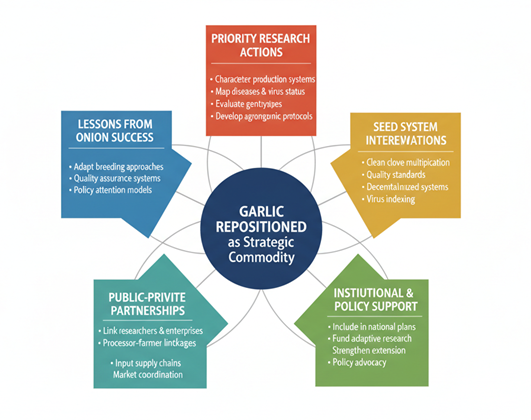
Priority research actions: characterize production systems across agroecological zones. Map diseases and planting material quality using standardized diagnostics. Evaluate genotypes through multi-location trials. Develop local agronomic recommendations including fertilizer trials specific to garlic.
Seed system interventions: establish regional centers for virus-free garlic propagation through meristem culture and thermotherapy (85–95% virus elimination) . Adapt Tanzania’s Quality Declared Seed system for garlic quality assurance
. Create decentralized multiplication chains linking labs to farmers.Institutional support: include garlic in national horticulture plans with defined targets and allocations. Fund dedicated garlic research programs. Strengthen extension capacity in garlic agronomy, pest management, and postharvest handling.
Public-private partnerships: link researchers, seed enterprises, processors, and farmers . The Tanzanian agro-input dealer network exemplifies mechanisms applicable to garlic seed systems
.Lessons from onion: investment in cultivar development, formal quality assurance, and policy attention enabled onion’s success. Breaking garlic’s cycle requires initial policy attention that may precede comprehensive evidence — a strategic investment in building the evidence base.
16. Conclusion
This review demonstrates that garlic is not inherently unimportant for African agriculture; it is comparatively neglected relative to its potential. The evidence reveals a consistent pattern — while garlic receives substantial research attention in Asia, Europe, and the Americas, it occupies marginal status in African portfolios. This underrepresentation emerges from converging biological, institutional, and market factors creating self-reinforcing cycles of neglect.
This neglect is costly. Garlic offers demonstrated agronomic value (high yields per unit area, 4–6 month cycle
), nutritional contributions, documented medicinal benefits , and commercial opportunities for income generation and import substitution. The substantial importation of garlic across Africa represents value flowing out of economies that could be captured through targeted production support.Garlic should be repositioned from a minor condiment crop to a strategic horticultural commodity deserving targeted African research attention. The strategic framework integrates priority research, seed system interventions, institutional support, and public-private partnerships. The case is strengthened by converging trends: growing demand for functional foods, climate adaptation imperatives
, AfCFTA regional market opportunities, and nutrition-sensitive policies recognizing diverse, nutrient-dense crops. The final call is for coordinated action — researchers to generate evidence, policymakers to create enabling environments, extension systems to build capacity, and private sector actors to invest in value chains linking producers to markets.